Panama vs Costa Rica for Retirement and Expat Living
Panama and Costa Rica are the two destinations that come up in almost every conversation about retiring in Central America. They sit side by side on the map, they share a similar tropical climate, both use the dollar or dollar-pegged currency, and both have well-established programs for foreign retirees. So why do people agonize over the choice?
Because on the surface they look similar, but in practice they attract very different people. This guide is an honest breakdown of the real differences — not a tourism brochure for either country. If you are seriously weighing these two destinations, this is what you actually need to know.
This guide is written by the team at Find Your Panama, so we know this territory well. But we have tried to give Costa Rica a fair hearing — there are real reasons people choose it, and if it is a better fit for you, you should know that. The goal is to help you make the right decision, not to sell you on Panama.
Quick Verdict: Category by Category
| Category | Panama | Costa Rica | Edge |
|---|---|---|---|
| Overall cost of living | Lower, especially outside Panama City | Higher, especially in beach and expat towns | Panama |
| Pensionado visa | $1,000/month pension, permanent residency in 3–6 months | $1,000/month pension, 7 years to permanent residency | Panama |
| Taxes on foreign income | Zero — territorial tax system | Zero — territorial tax system | Tie |
| Property taxes | 0.5% on values above $120K; exempt below | 0.25% on all property | Costa Rica |
| Private healthcare quality | Excellent in Panama City; good in David | Excellent in San José; good in major towns | Tie |
| Natural beauty and biodiversity | Excellent | World-class — slight edge | Costa Rica |
| Infrastructure (roads, internet, water) | Better in urban areas; uneven rural | Improving but behind Panama City | Panama |
| Safety | Good — lower crime rate | Good — slightly higher crime rate | Panama |
| Expat community maturity | Growing fast; younger community | Well-established; more integrated | Costa Rica |
| Banking for foreigners | Difficult — one of the harder aspects of Panama | Easier — more foreigner-friendly institutions | Costa Rica |
| Caribbean islands / beach access | Bocas del Toro — unique, undeveloped | Limited Caribbean coast options | Panama |
| Pensionado daily discounts | 25% off airlines, utilities, medical; 50% off hotels | Smaller day-to-day discount program | Panama |
Cost of Living
Panama is cheaper — not dramatically, but meaningfully. The difference is most pronounced outside the two capitals. In rural Panama, in the Caribbean islands, or in smaller Pacific towns, costs are significantly lower than comparable areas in Costa Rica, which has seen sustained price increases driven by rising demand from North American expats and a tourism-heavy economy.
A comfortable retired couple can live well in Panama on $2,000 to $2,800 per month depending on lifestyle and location. In Costa Rica, the equivalent budget is closer to $2,400 to $3,500, with popular expat towns like Atenas, Nosara, and Tamarindo pushing toward the higher end.
| Expense | Panama | Costa Rica |
|---|---|---|
| 2BR rental (non-capital) | $700 – $1,400 | $900 – $1,800 |
| Groceries (couple/month) | $300 – $500 | $400 – $650 |
| Dining out (couple/month) | $300 – $600 | $400 – $700 |
| Utilities | $60 – $130 | $80 – $160 |
| Private health insurance (couple, 65) | $150 – $300/mo | $180 – $380/mo |
| Vehicle (imported) | Less expensive — canal trade access | More expensive — high import duties |
One area where Costa Rica has an unexpected advantage: the Central Valley around San José can be genuinely affordable for day-to-day living. Some retirees report living on $1,600 to $1,800 per month in areas like Grecia or Atenas, which is competitive with mid-range Panama budgets. The problem is that beach and nature towns — where most people actually want to live — are considerably pricier.
Imported vehicles in Costa Rica carry duties as high as 50–80% of the vehicle's value, making cars substantially more expensive than in Panama, where Canal Zone trade access keeps import costs much lower. If you plan to drive, this matters.
Visa and Residency
This is one of Panama's clearest advantages. Both countries offer a Pensionado visa requiring proof of $1,000 per month in pension income — but what you get for that is very different.
Panama's Pensionado is one of the most recognized retirement visas in the world. You apply, provide documentation, and most retirees receive their temporary ID card relatively quickly. Permanent residency follows in three to six months. You can move to Panama with confidence that your legal status will be resolved within the year.
Costa Rica's process is slower. The Pensionado visa requires renewing every two years, and permanent residency is only available after seven years of continuous residency. Processing times have been notoriously long — six to twelve months just to receive your initial approval is common — and the bureaucracy is one of the most consistent complaints among expats who have been through it.
Panama's Pensionado also comes with daily discounts: 25% off airline tickets, 25% off monthly electricity and phone bills, 25% off medical consultations and prescriptions, 50% off hotel stays, and 50% off entertainment. These aren't one-time perks — they apply for life and add up materially over a decade of retirement.
Taxes
Both countries operate territorial tax systems, meaning foreign-source income — pensions, Social Security, investment dividends, rental income from properties outside the country — is not taxed locally. For most North American retirees living on US retirement income, this is the rule that matters most, and it is effectively the same in both countries.
Property taxes diverge. Costa Rica charges 0.25% annually on all property. Panama charges 0% on properties valued under $120,000, and 0.5% on values above that threshold. For a $350,000 home, Panama's annual property tax runs roughly $1,150, while Costa Rica's on a similar property runs about $875. A mild advantage to Costa Rica for property holders, though the gap is small relative to the overall cost differential.
Panama has no capital gains tax on the first property sale, and no inheritance tax for direct heirs. Costa Rica has a capital gains tax of 15% on property profits, introduced in 2019, which is worth factoring in if you are thinking about property as an investment rather than a permanent home.
Healthcare
Both countries have excellent private healthcare at a fraction of US costs — this is not a differentiating factor in the way it might have been a decade ago. In both countries, you can access good private specialists, hospitals, and dental care for $50 to $150 per consultation.
For serious care — cardiac surgery, oncology, complex neurology — Panama City's private hospitals (Hospital Nacional, Hospital Punta Pacífica affiliated with Johns Hopkins) have a slight edge in terms of technology and specialist concentration. San José's Hospital CIMA and Clinica Biblica are also excellent and well-established. The practical reality: for serious illness, most expats in either country travel to the other capital if needed, or return to the US.
Where you live within each country matters more than the country itself. Boquete in Panama has David (30 minutes) for regional care. Bocas del Toro has limited local facilities — serious cases go to Panama City. In Costa Rica, the Central Valley has the best healthcare access; remote beach towns have the same limitations as rural Panama.
Public healthcare is theoretically available in both countries for legal residents. In practice, wait times in the public system — particularly in Costa Rica's CAJA — frustrate most expats who can afford private care. Budget for private insurance in either country.
Lifestyle and Regions
This is where the two countries genuinely diverge — and where the right answer depends entirely on what you are looking for.
Costa Rica's strengths
Costa Rica has earned its reputation. The Central Valley is genuinely beautiful, with mild year-round temperatures, excellent infrastructure, and towns like Atenas and Grecia that have been expat favorites for twenty years. The pura vida culture — slower, friendlier, less commercially intense than Panama City — is real and appealing if that resonates with you. Costa Rica's commitment to conservation means protected rainforests, incredible wildlife, and a culture that genuinely values the natural environment. If long walks through cloud forest, spotting toucans, and an unhurried small-town life is your vision, Costa Rica delivers.
Costa Rica also has a more mature, integrated expat community. You will find English-speaking doctors, lawyers, and property agents throughout the popular regions in a way that Panama's smaller expat communities outside the capital cannot fully match.
Panama's strengths
Panama's range is extraordinary and underappreciated. Panama City is a genuine metropolis — Latin American banking capital, direct flights to most major US cities, world-class restaurants, modern hospitals, and a skyline that surprises first-time visitors. Then three hours away is Bocas del Toro, a Caribbean archipelago that looks like it was designed as the backdrop for an adventure novel. Then another direction is Boquete, a cool mountain town that legitimately rivals Atenas for lifestyle quality. Then the Azuero Peninsula, largely unknown to the expat world, with authentic Panamanian culture and Pacific beaches that are still developing.
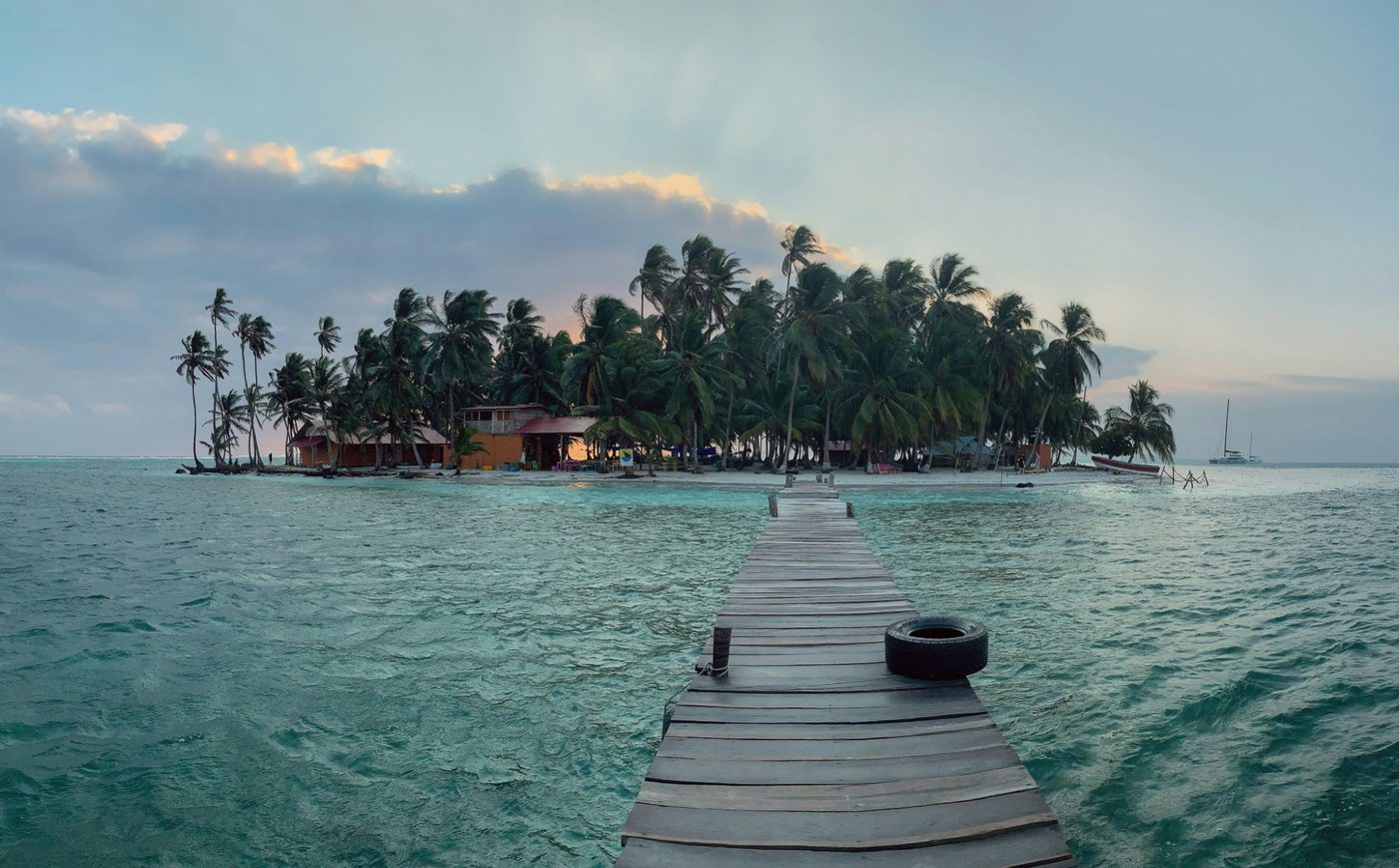
The diversity of landscapes and lifestyles within Panama is genuinely hard to match in Central America. If the Caribbean — real Caribbean, with stilted houses over turquoise water and world-class surfing at Playa Bluff — is part of your vision, Panama has something Costa Rica simply does not offer at the same level.
Which Panama region fits your lifestyle?
Take our 8-question quiz and find out whether Bocas del Toro, Boquete, Panama City, or one of four other regions is your best match.
Take the Free Quiz →Safety
Both countries are safer than their regional neighbors and considered acceptable destinations for North American and European retirees. Panama's crime rate is slightly lower than Costa Rica's — 44.3 vs 53.7 incidents per 100,000 population in 2025. Both are safer than most US cities by comparable measures.
In both countries, petty theft — phone snatching, pickpocketing, opportunistic vehicle break-ins — is the primary concern for expats, not violent crime. Standard urban precautions apply. Panama City's affluent neighborhoods (El Cangrejo, Marbella, Casco Viejo) are very safe. San José's expat zones (Escazú, Santa Ana) are similarly safe but require more awareness in transitional neighborhoods.
Rural and island areas in both countries are generally very safe, with lower crime rates than the capitals. Bocas del Toro, Boquete, Pedasí, Boquete, Atenas, and Grecia all have strong safety reputations among long-term expats.
Property and Real Estate
Property purchase processes in both countries are reasonably straightforward for foreigners, with full ownership rights for non-citizens. The key differences:
Panama has a robust titled land system in most developed areas. New construction on titled land — particularly in Bocas del Toro, where Bocas Homes International operates — provides clear legal ownership equivalent to North American standards. Panama City's property market is well-developed with a genuine resale market. Appreciation has been consistent in the past decade. One important nuance: some rural and island areas have ROP (Right of Possession) land rather than titled, which carries different legal protections — always verify title before purchasing.
Costa Rica has a well-established property market with strong legal protections. The maritime zone law limits beachfront ownership (the first 50 meters from the high tide line is public; the next 150 meters requires a concession rather than full title). This affects some of the most desirable coastal properties. The capital gains tax introduced in 2019 adds a consideration for investors buying speculatively.
Panama's banking system is stricter than Costa Rica's about opening accounts for foreign residents. Anti-money-laundering compliance requirements mean many banks require significant documentation, prior banking history, and sometimes an established business relationship before opening an account for a new foreign resident. This is the most common practical frustration for people who move to Panama, and it is worth knowing in advance. Costa Rica's banking system is generally more accessible for newcomers.
Which Country Is Right For You
Panama is your match
- Want faster, simpler permanent residency
- Are drawn to Caribbean island living (Bocas del Toro)
- Want the highest daily Pensionado discounts
- Are on a tighter budget — outside Panama City, costs are lower
- Want direct flight access to a major international hub
- Are considering property as an investment alongside a lifestyle purchase
- Want access to Johns Hopkins-affiliated hospital care
- Value extraordinary regional diversity — mountains, coast, islands, city
Costa Rica is your match
- Value an established, mature expat community
- Prioritize natural beauty and biodiversity above all else
- Want the pura vida culture — slower, less commercially intense
- Find banking setup easier with more foreigner-friendly institutions
- Plan to own property below $120K (lower property tax)
- Want a more integrated expat-local community dynamic
- Have a long time horizon and don't mind the slower residency path
- Are comfortable with higher overall costs for the lifestyle
International Living named Panama the world's top retirement destination for 2025, and Panama has consistently held that position in recent years as Costa Rica's costs have risen and its residency backlog has grown. That ranking reflects real-world data from thousands of expats who have made both comparisons.
But rankings are generalizations. The honest answer is that if your vision of retirement is a small Central Valley town with hiking trails, toucans, and a twenty-year-old expat club that organizes weekly dinners — Costa Rica may deliver that specific experience better than Panama can. And if your vision is a stilted house over turquoise Caribbean water, surfing at dawn, and the feeling of being somewhere genuinely undiscovered — then Bocas del Toro exists, and nothing in Costa Rica is quite like it.
The question is not which country is better. The question is which version of yourself you are retiring into.
Still deciding? Start with the quiz.
If Panama is on your list, our 2-minute quiz matches you to the specific region — Caribbean, mountain, Pacific, or city — that fits your lifestyle, budget, and priorities. Free, no email required to start.
Find Your Panama Region →